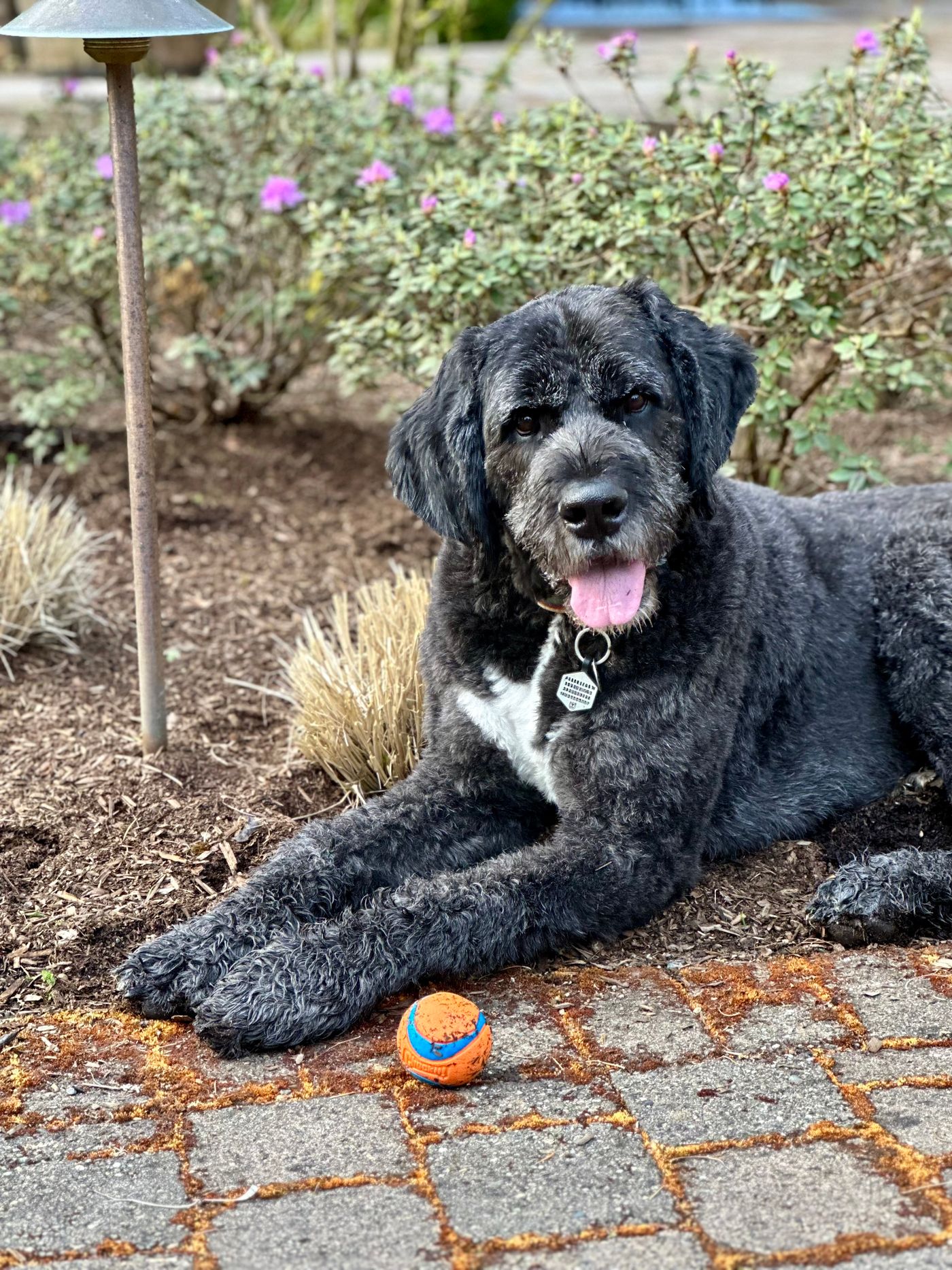
Living with a Bernedoodle
What day to day actually looks like, coat to bowl to vet visits.
What day to day actually looks like, coat to bowl to vet visits.
The everyday version
That wavy-to-curly coat can look intimidating. In practice, a regular brushing and grooming schedule keeps most Bernedoodles looking great.
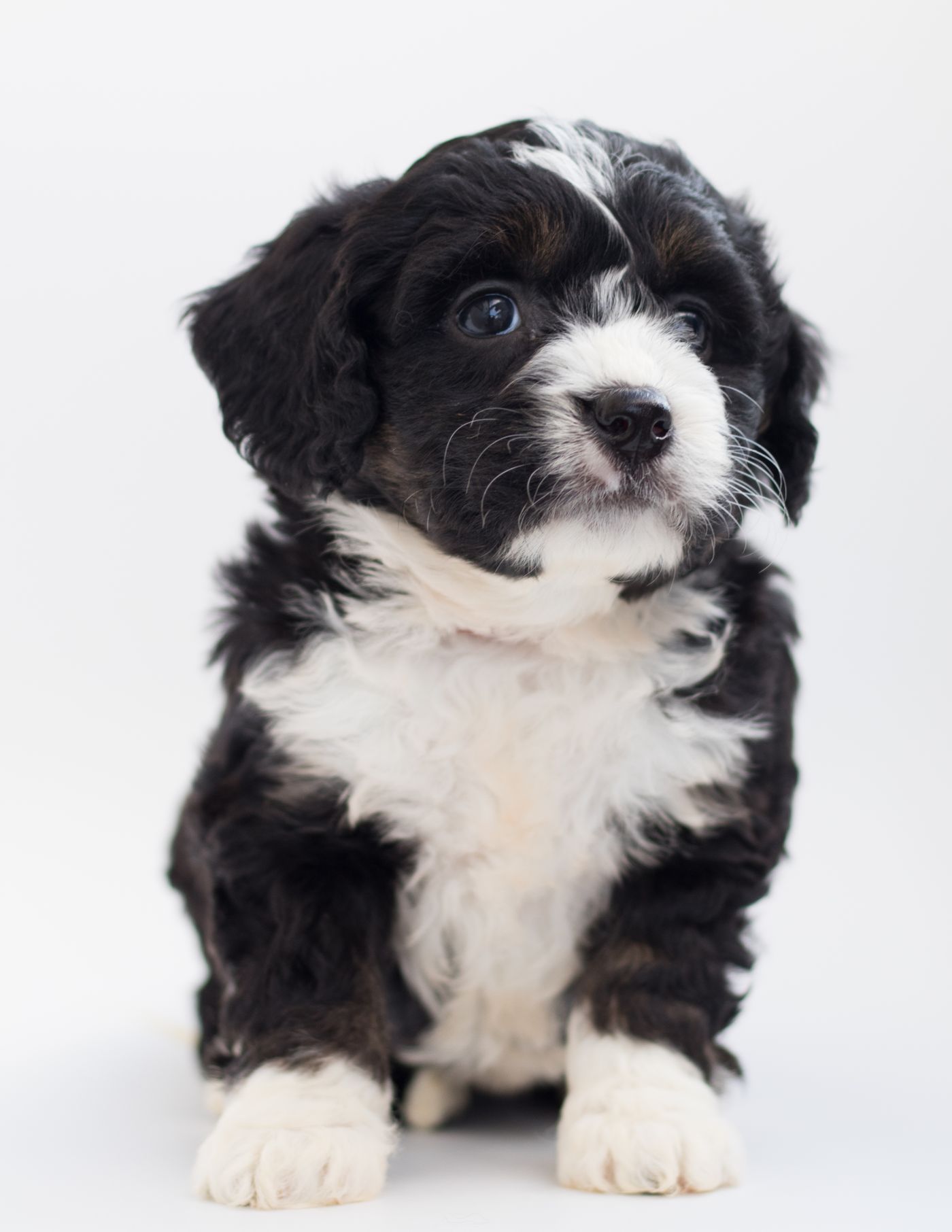
Wavier coats need brushing two to three times a week. Curlier, more Poodle-heavy coats need brushing every day or two to prevent matting, especially around the ears and legs. Most owners schedule a professional groom every 6 to 8 weeks.
Bernedoodles inherit intelligence and drive from the Poodle side, along with a calmer, less intense energy from the Bernese side. Most do well with a daily walk plus some form of mental enrichment, they are not a breed that needs hours of hard exercise.
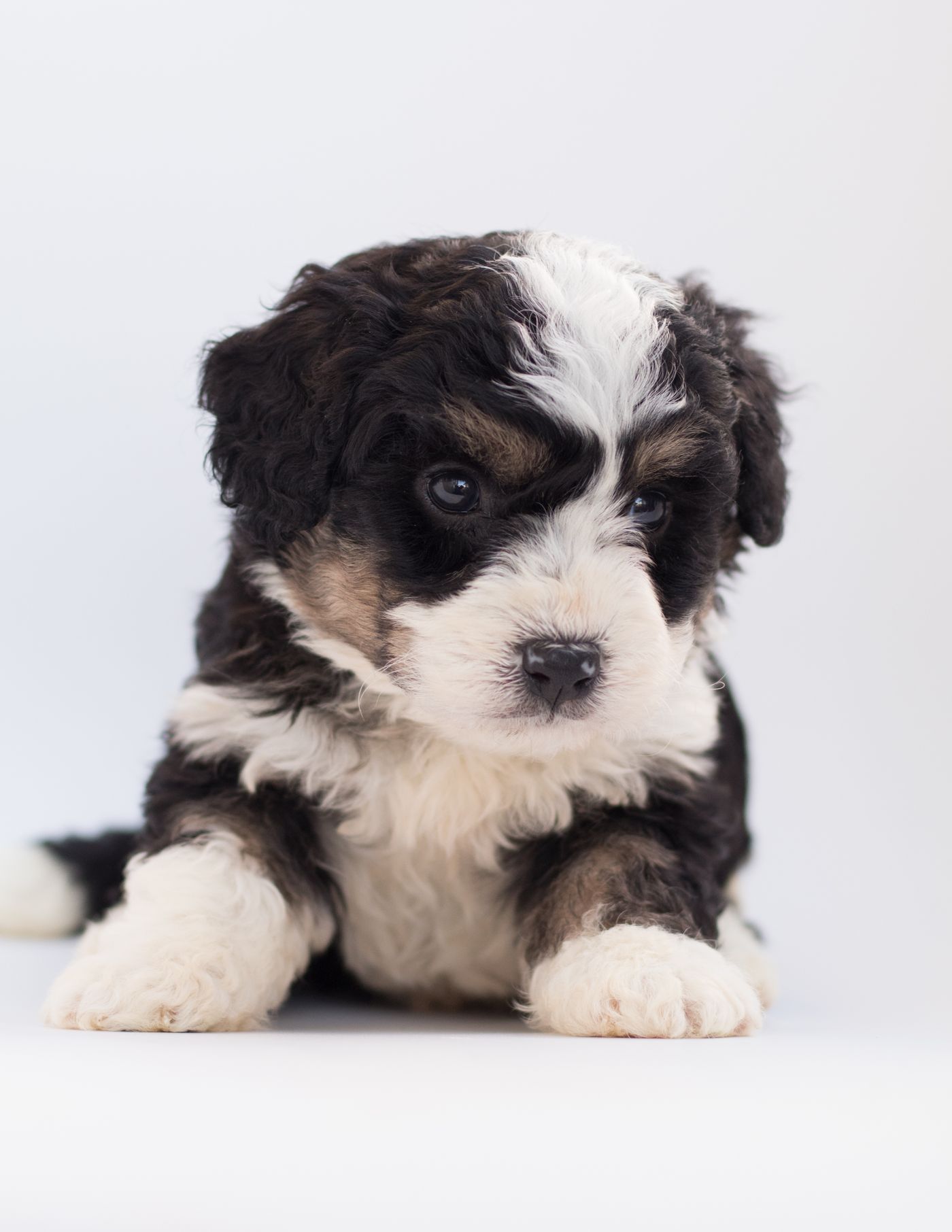
A high-quality diet built around real animal protein supports coat health and joint development, especially in standard-size Bernedoodles carrying more weight on growing joints. Large or giant breed puppy formulas are worth asking your vet about for standards, whose growth window runs longer than a mini's. See our mini vs standard size guide for exact growth timelines by size.
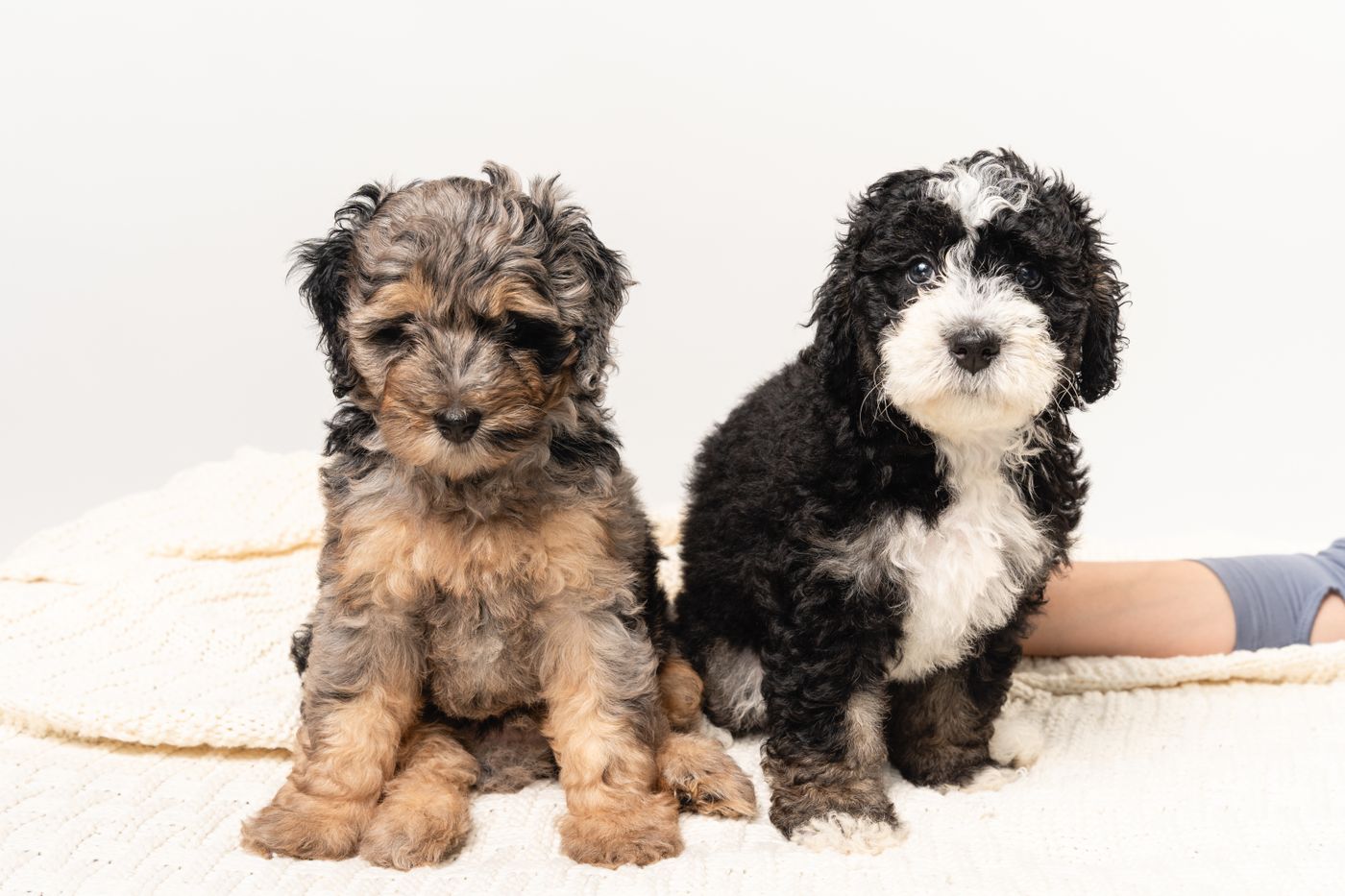
Beyond standard vaccinations and annual exams, ask your vet about hip and elbow monitoring as your Bernedoodle grows, even if the parents tested clear. Standard-size dogs benefit from periodic joint checks given the size they carry from the Bernese side.
Learn what to verify in a Bernedoodle breeder, then a home like yours.
About the breedNot there yet? Read the full first-time buyer checklist